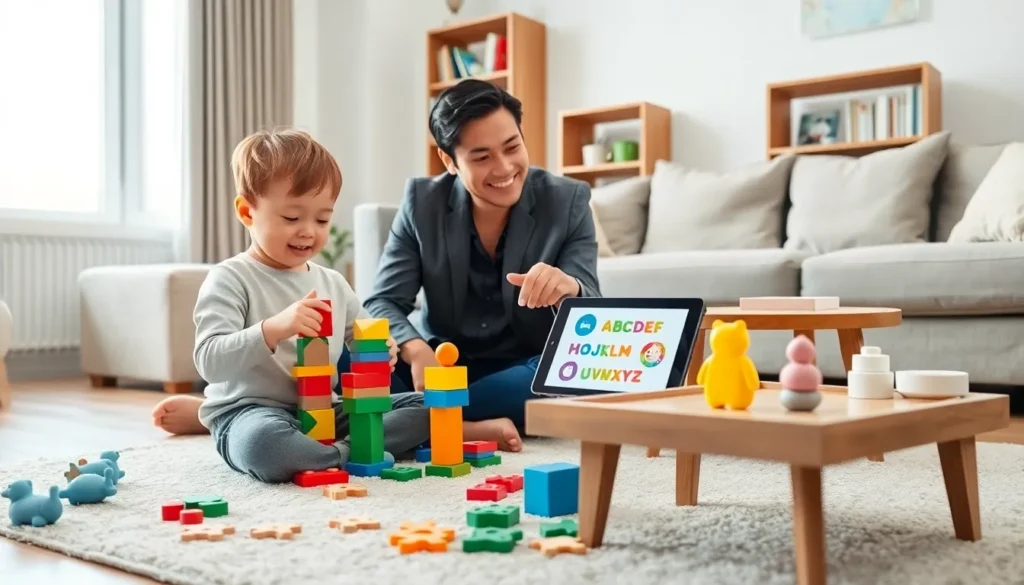
Educational apps and toys for beginners can transform how young children learn. Parents today have access to countless tools that build foundational skills in reading, math, and problem-solving. But with so many options available, choosing the right ones can feel overwhelming. This guide breaks down the best educational apps and toys for beginners, explains what makes them effective, and helps parents make smart choices for their child’s early learning journey.
Table of Contents
ToggleKey Takeaways
- Educational apps and toys for beginners build foundational skills in reading, math, and problem-solving through engaging, play-based learning.
- Top apps like Khan Academy Kids, ABCmouse, and Duolingo ABC offer structured, age-appropriate lessons for children ages 2-8.
- Physical toys such as building blocks, puzzles, and magnetic tiles develop fine motor skills and spatial awareness that screens can’t replicate.
- Choose educational apps and toys for beginners based on age appropriateness, your child’s interests, and active engagement over passive entertainment.
- Balance screen time with hands-on play by limiting apps to one hour daily and using them as supplements to physical learning experiences.
- Co-play with your child during app time and rotate toys regularly to maximize learning outcomes and maintain engagement.
Why Educational Apps and Toys Matter for Young Learners
Children’s brains develop rapidly during the first five years of life. During this period, educational apps and toys for beginners provide structured opportunities for learning through play. Studies show that children who engage with age-appropriate educational tools develop stronger cognitive skills and perform better academically later in life.
Educational apps and toys work because they make learning fun. A child stacking blocks learns spatial reasoning. A toddler using a letter-tracing app builds pre-writing skills. These tools turn abstract concepts into hands-on experiences that stick.
The key benefit? Active engagement. Unlike passive screen time, quality educational apps and toys require children to think, respond, and create. They build attention spans, encourage curiosity, and foster independence. For beginners especially, these tools create positive associations with learning that can last a lifetime.
Top Educational Apps for Beginners
The best educational apps for beginners combine entertainment with genuine skill-building. Here are some standout options parents should consider:
Khan Academy Kids offers free lessons in reading, math, and social-emotional learning. It adapts to each child’s level and covers ages 2-8. The app uses colorful characters and interactive activities to keep young learners engaged.
ABCmouse provides a full curriculum for children ages 2-8. It covers reading, math, science, and art through games, puzzles, and songs. The structured learning paths help parents track progress easily.
Endless Alphabet teaches vocabulary and spelling through interactive word puzzles. Children drag letters into place while friendly monsters demonstrate word meanings. It’s perfect for preschoolers building language skills.
Duolingo ABC focuses specifically on literacy for ages 3-6. The app uses short, engaging lessons to teach letter recognition, phonics, and early reading. Best of all, it’s completely free.
Todo Math makes early math concepts accessible through games and daily challenges. It covers counting, patterns, and basic operations for children ages 3-8.
When selecting educational apps for beginners, parents should look for options that limit ads, offer offline access, and provide progress tracking features.
Best Educational Toys to Support Early Development
Physical toys remain essential for early development. Educational toys for beginners build fine motor skills, spatial awareness, and social abilities that apps alone can’t replicate.
Building blocks and LEGO DUPLO teach cause and effect, spatial reasoning, and creativity. Children learn to plan, problem-solve, and persist through trial and error.
Puzzles develop cognitive skills and hand-eye coordination. Start with simple wooden puzzles featuring large pieces, then progress to more complex options as skills improve.
Play-Doh and modeling clay strengthen fine motor muscles needed for writing. They also encourage creativity and sensory exploration.
Magnetic tiles like Magna-Tiles combine open-ended play with geometry concepts. Children build structures while learning about shapes, symmetry, and balance.
Sorting toys and counting bears introduce early math concepts like classification, counting, and patterns. These hands-on manipulatives make abstract ideas concrete.
Pretend play sets (kitchens, tool benches, doctor kits) build language skills, social understanding, and emotional intelligence. Children practice real-world scenarios and develop vocabulary through imaginative play.
The best educational toys for beginners grow with children. Look for open-ended options that offer multiple ways to play rather than single-purpose gadgets.
How to Choose the Right Educational Tools for Your Child
Not every educational app or toy suits every child. Parents should consider several factors when selecting learning tools.
Age appropriateness matters most. Educational apps and toys for beginners should match the child’s developmental stage. A toy that’s too advanced frustrates children. One that’s too simple bores them. Check age recommendations, but also observe your child’s current abilities.
Follow the child’s interests. A dinosaur-obsessed toddler will engage more with a dinosaur counting game than generic shapes. Use existing interests as entry points to new skills.
Prioritize active over passive engagement. The best educational tools require children to do something, build, sort, answer, create. Avoid apps that let children tap mindlessly or toys that do all the work.
Check reviews from parents and educators. Look for feedback about actual learning outcomes, not just entertainment value. Organizations like Common Sense Media provide detailed reviews of educational apps.
Consider durability and safety. Young children are rough with toys. Choose options made from quality materials with no small parts for children under three.
Test before committing. Many educational apps offer free trials. Use them. Let your child explore the app before purchasing a subscription.
Balancing Screen Time and Hands-On Play
Educational apps offer real benefits, but they shouldn’t replace physical play entirely. The American Academy of Pediatrics recommends limiting screen time for children ages 2-5 to one hour per day of high-quality programming.
Here’s how parents can strike the right balance with educational apps and toys for beginners:
Use apps as supplements, not substitutes. Educational apps work best when they reinforce concepts children also explore through physical play. A child learning letters on an app should also practice with magnetic letters or alphabet blocks.
Co-view and co-play when possible. Children learn more from educational apps when adults engage alongside them. Ask questions, make connections, and extend the learning beyond the screen.
Create screen-free zones and times. Establish routines where devices aren’t allowed, during meals, before bedtime, or during outdoor play. This helps children develop self-regulation around technology.
Rotate toys and apps regularly. Children lose interest in familiar options. Rotating toys every few weeks keeps engagement high without constant new purchases.
Watch for signs of overstimulation. If a child becomes irritable or has trouble transitioning away from screens, reduce digital time and increase hands-on activities.
The goal isn’t eliminating screens but using them intentionally. Quality educational apps, combined with physical toys and real-world experiences, create a well-rounded learning environment.