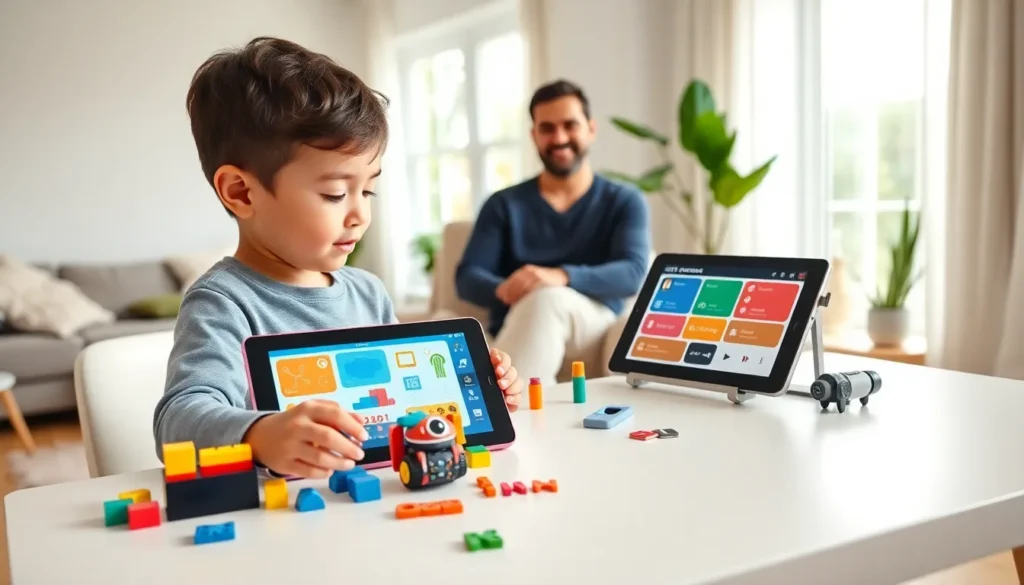
Educational apps and toys trends 2026 show a clear shift toward smarter, more engaging learning tools. Parents, teachers, and developers now focus on products that adapt to each child’s pace and style. The market has moved beyond basic drill-and-practice games. Today’s educational apps and toys combine advanced technology with proven teaching methods. This article covers the six major trends shaping how children will learn and play in 2026. From AI-driven platforms to screen-free options, these developments offer practical insights for anyone investing in children’s education.
Table of Contents
ToggleKey Takeaways
- Educational apps and toys trends 2026 highlight AI-powered personalization that adapts to each child’s learning pace and style in real time.
- Augmented and virtual reality educational tools have become more affordable, with entry-level VR headsets under $100 offering immersive learning experiences.
- STEM and coding toys now introduce programming concepts to children as young as three through hands-on, visual approaches.
- Screen-free and hybrid educational toys address screen time concerns while still delivering effective learning through audio, manipulatives, and printable activities.
- Social-emotional learning features in educational apps and toys teach empathy, self-regulation, and cooperation alongside academic skills.
- Families should review privacy policies before purchasing AI-powered educational products and balance screen-based and screen-free options based on their child’s needs.
AI-Powered Personalized Learning Experiences
Artificial intelligence now drives the most effective educational apps and toys on the market. These tools analyze a child’s performance in real time. They adjust difficulty levels, suggest new topics, and fill knowledge gaps without adult intervention.
In 2026, AI-powered educational apps track more than right or wrong answers. They monitor how long a child pauses before responding, which question types cause frustration, and what time of day yields the best focus. This data creates a learning path unique to each user.
Several educational toys now include voice recognition and natural language processing. A child can ask questions out loud and receive age-appropriate explanations. The toy remembers previous conversations and builds on them.
Parents report higher engagement rates with AI-based educational apps. Children stay motivated because the content matches their skill level. Too easy feels boring. Too hard feels discouraging. AI finds the sweet spot.
Privacy remains a concern. Reputable developers encrypt user data and give parents full control over what information gets stored. Before purchasing any AI-powered educational app or toy, families should review the company’s data policy.
The Rise of Augmented and Virtual Reality in Education
Augmented reality (AR) and virtual reality (VR) have moved from novelty to necessity in educational apps and toys. In 2026, these technologies offer immersive experiences that textbooks simply cannot match.
AR educational apps overlay digital information onto the physical world. A child points a tablet at a plant, and the app displays its parts, growth cycle, and habitat. History lessons come alive when students see 3D models of ancient structures in their living rooms.
VR educational toys take immersion further. Headsets transport children to the ocean floor, outer space, or inside the human body. These experiences create lasting memories and deeper understanding.
The hardware has become more affordable. Entry-level VR headsets designed for children now cost under $100. They include parental controls that limit session length and filter content.
Educators use AR and VR educational apps for group activities too. Classrooms conduct virtual field trips to museums, national parks, and historical sites. Students in rural areas access the same experiences as those in major cities.
Motion sickness concerned early adopters. Newer devices reduce this problem with higher refresh rates and better tracking. Most children can use VR educational toys comfortably for 20-30 minutes at a time.
STEM and Coding Toys for Early Learners
STEM education starts earlier than ever. Educational apps and toys now introduce coding concepts to children as young as three years old.
The best STEM educational toys use physical manipulation. Children arrange blocks, connect circuits, or build structures. Each action produces a visible result. This hands-on approach teaches cause and effect before formal programming syntax.
Screen-based coding educational apps have evolved too. In 2026, popular platforms use visual programming languages. Children drag colorful blocks instead of typing text. They create animations, games, and interactive stories.
Robotics kits represent another growing segment. These educational toys combine building, coding, and problem-solving. A child assembles a robot, programs its movements, and watches it perform tasks. Failure becomes part of the learning process, when the robot doesn’t work, the child debugs and tries again.
Gender-neutral marketing has expanded the audience for STEM educational apps and toys. Companies design packaging and characters that appeal to all children. Research shows this approach increases participation from groups historically underrepresented in technical fields.
Parents don’t need technical backgrounds to support STEM learning at home. Most educational apps include guided activities and progress tracking. The child leads the exploration while the parent offers encouragement.
Screen-Free and Hybrid Learning Solutions
Screen time concerns drive demand for screen-free educational toys. In 2026, manufacturers offer sophisticated options that teach without displays.
Audio-based educational toys have surged in popularity. Interactive devices play stories, music, and lessons. Children control content with buttons, cards, or voice commands. These products develop listening skills and imagination.
Hybrid educational apps bridge physical and digital learning. A child plays with a tangible toy, then scans it with a tablet to unlock related digital content. The screen time stays limited while the learning extends.
Printable activities from educational apps offer another hybrid approach. Parents download worksheets, craft templates, and game boards. Children complete hands-on projects that reinforce concepts from their apps.
Manipulative-based educational toys teach math and literacy through touch. Magnetic letters, counting beads, and pattern blocks help young children grasp abstract concepts. These classic tools remain effective alongside newer technology.
Experts recommend a balanced approach. Screen-based educational apps work well for certain skills. Screen-free educational toys excel at others. Smart families mix both types based on the child’s age, interests, and daily schedule.
Social-Emotional Learning Through Play
Social-emotional learning (SEL) has become a priority for educational apps and toys developers. In 2026, products address empathy, self-regulation, and relationship skills alongside academic content.
Storytelling educational apps present characters facing social challenges. Children make choices that affect outcomes. They see consequences of kindness, honesty, and cooperation. Discussion prompts help parents extend these lessons.
Cooperative educational toys require teamwork. Two or more players must communicate and coordinate to succeed. Competition still has its place, but collaborative games teach different, equally valuable, skills.
Emotion-recognition features appear in some AI-powered educational apps. The software detects frustration through voice tone or facial expression. It responds with encouragement or suggests a break. This technology helps children identify and manage their feelings.
Mindfulness educational apps designed for children have grown substantially. Short guided meditations, breathing exercises, and calming activities help young users handle stress. Schools incorporate these tools into daily routines.
Parents value SEL educational toys because the benefits extend beyond academics. Children who understand their emotions and respect others perform better in school, friendships, and eventually careers. These skills matter as much as reading or math.