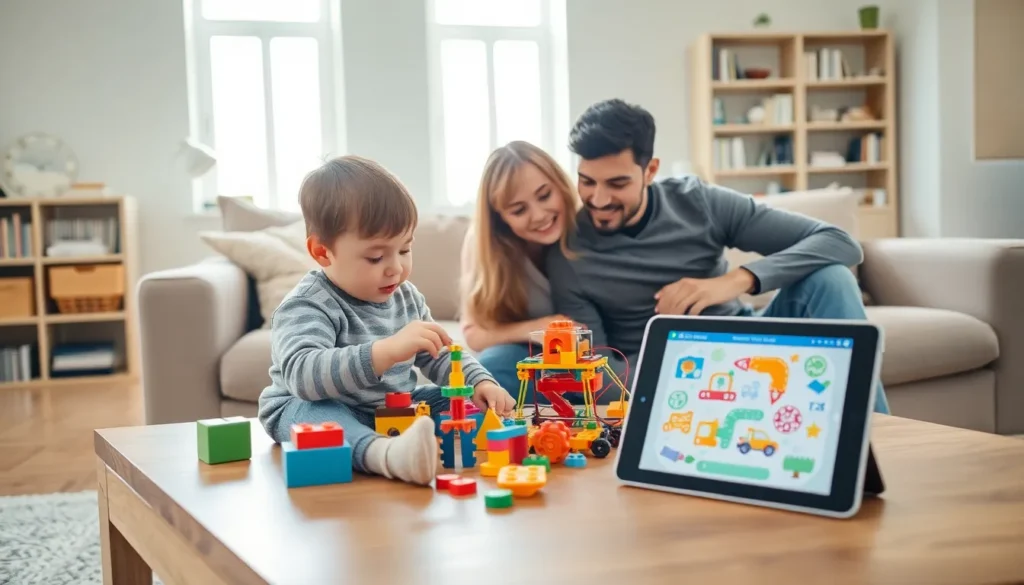
Educational apps and toys have changed how children learn at home and in classrooms. Parents now have access to thousands of products that promise to boost skills in reading, math, science, and critical thinking. But which ones actually work? This guide breaks down the best categories of educational apps and toys, explains what makes them effective, and offers practical tips for choosing the right tools for any age group. Whether a child is stacking blocks or solving puzzles on a tablet, the right educational products can turn playtime into meaningful learning experiences.
Table of Contents
ToggleKey Takeaways
- Educational apps and toys are most effective when designed with specific learning objectives, not just vague claims of promoting learning.
- The best educational toys—like building sets, STEM kits, and puzzles—encourage active problem-solving and grow with your child.
- Choose age-appropriate educational apps that feature adaptive difficulty, progress tracking, and minimal ads or in-app purchases.
- Balance screen time with hands-on play by pairing educational apps with physical activities like building blocks or art supplies.
- Prioritize co-play with your child to extend learning beyond the screen and turn playtime into meaningful conversations.
- Read reviews from parents and educators on sites like Common Sense Media to separate quality educational products from marketing hype.
Why Educational Apps and Toys Matter for Child Development
Children learn best through play. Research from the American Academy of Pediatrics confirms that play-based learning supports cognitive, social, and emotional growth. Educational apps and toys take this concept further by adding structure and purpose to playtime.
High-quality educational toys help kids develop fine motor skills, problem-solving abilities, and spatial awareness. Building blocks teach physics concepts before a child ever hears the word “gravity.” Shape sorters introduce pattern recognition. STEM kits spark curiosity about how things work.
Educational apps offer similar benefits in digital form. They adapt to a child’s skill level, provide instant feedback, and keep kids engaged through interactive features. A well-designed reading app can improve phonics skills just as effectively as flashcards, sometimes more so, because children stay motivated longer.
The key difference between educational products and regular toys? Intentional design. Educational apps and toys are built with specific learning goals in mind. They challenge children just enough to promote growth without causing frustration.
That said, not all products labeled “educational” deliver real results. Parents need to look beyond marketing claims and evaluate what a toy or app actually teaches.
Top Categories of Educational Toys to Consider
Educational toys come in many forms. Here are the categories that consistently deliver learning value:
Building and Construction Sets
LEGO, Magna-Tiles, and wooden blocks remain popular for good reason. They teach spatial reasoning, engineering basics, and creative problem-solving. Kids learn cause and effect as they build structures that stand or fall.
STEM and Science Kits
Chemistry sets, robotics kits, and coding toys introduce scientific thinking early. Products like littleBits and Snap Circuits let children experiment with electronics in safe, hands-on ways.
Puzzles and Logic Games
Jigsaw puzzles, tangrams, and logic board games strengthen critical thinking. They require patience and strategy, skills that transfer to academic success.
Art and Creativity Supplies
Don’t overlook crayons, clay, and craft kits. Creative play builds fine motor control and self-expression. Educational toys in this category often include guided projects that teach color theory, symmetry, or basic design principles.
Pretend Play Sets
Kitchens, doctor kits, and tool benches may seem simple. But they teach social skills, vocabulary, and real-world concepts. A child running a pretend grocery store practices math, communication, and sequencing.
The best educational toys grow with children. Look for products that offer multiple difficulty levels or open-ended play possibilities.
Best Types of Educational Apps for Different Age Groups
Age matters when selecting educational apps. A toddler needs different features than a third-grader. Here’s a breakdown by age group:
Ages 2-4: Early Learning Apps
Toddlers benefit from apps focused on basic skills. Look for programs that teach letters, numbers, colors, and shapes through simple touch interactions. Apps like Endless Alphabet and PBS Kids Games use animation and repetition to reinforce concepts. Short sessions work best, five to ten minutes at a time.
Ages 5-7: Reading and Math Foundations
Kindergartners and early elementary students need apps that build literacy and numeracy. Khan Academy Kids offers free lessons across multiple subjects. Reading apps like Homer and Teach Your Monster to Read turn phonics practice into games.
Ages 8-12: Subject-Specific Learning
Older kids can handle more complex educational apps. Prodigy Math, Duolingo, and BrainPOP cover specific subjects in depth. Coding apps like Scratch Jr and Tynker introduce programming concepts through visual, block-based interfaces.
The best educational apps share common traits: adaptive difficulty, progress tracking, and minimal ads or in-app purchases. They feel like games but deliver real educational content.
How to Choose Quality Educational Products
Not every product with “educational” on the label delivers value. Here’s how parents can separate effective tools from marketing hype:
Check for clear learning objectives. Quality educational apps and toys state what skills they develop. Vague claims like “promotes learning” mean little. Look for specifics: “teaches addition facts 1-10” or “develops fine motor coordination.”
Read reviews from parents and educators. User feedback reveals how products perform in real homes and classrooms. Common Sense Media rates educational apps with detailed breakdowns of learning value, engagement, and age appropriateness.
Prioritize active over passive engagement. The best educational toys require children to think, create, or solve problems. Avoid products where kids just watch or press buttons randomly.
Consider open-ended options. Toys with one “right” answer get boring fast. Open-ended educational toys like blocks, art supplies, and building sets offer unlimited play possibilities.
Watch for excessive screen rewards. Some educational apps use so many animations, sounds, and rewards that they distract from actual learning. If a child spends more time watching celebrations than practicing skills, the app isn’t working.
Price doesn’t always indicate quality. Many free educational apps outperform expensive ones. And simple toys, a set of blocks, a deck of cards, often teach more than elaborate electronic gadgets.
Balancing Screen Time With Hands-On Play
Educational apps offer real benefits, but they shouldn’t replace physical play. Children need both digital and hands-on experiences for healthy development.
The American Academy of Pediatrics recommends limiting screen time for children ages 2-5 to one hour per day of high-quality programming. For older kids, consistent limits help maintain balance.
Here’s how families can blend educational apps and toys effectively:
Pair apps with physical activities. After a child uses a coding app, let them build with LEGO. Follow a music app session with playing real instruments or singing together.
Set clear boundaries. Designate screen-free times, such as meals and the hour before bed. Use timers so children know when app time ends.
Choose apps that encourage offline play. Some educational apps inspire real-world activities. A nature identification app might lead to backyard exploration. A drawing app might spark interest in physical art supplies.
Prioritize co-play. Educational apps and toys work better when adults participate. Ask questions. Extend learning beyond the screen or toy. “What else could you build?” or “How did you figure that out?” turns solo play into conversation.
The goal isn’t to eliminate screens. It’s to create a healthy mix where educational apps and toys complement each other.