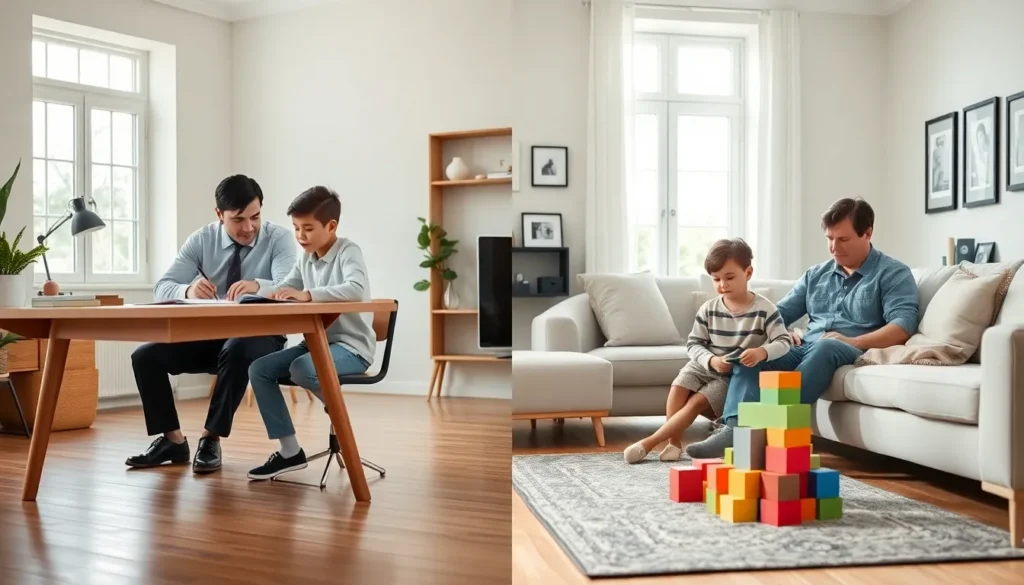
The debate around helicopter parenting vs free-range parenting has shaped how modern families approach child-rearing. Parents want the best for their children, but they often disagree on what “the best” actually looks like.
Some parents hover closely, monitoring every activity and stepping in at the first sign of trouble. Others step back, allowing children to explore, fail, and learn independently. Both styles carry strong opinions, and passionate defenders.
This article breaks down what helicopter parenting and free-range parenting actually mean, examines the pros and cons of each approach, and offers practical guidance for finding a balance that works for your family.
Table of Contents
ToggleKey Takeaways
- Helicopter parenting involves close monitoring and quick intervention, which can provide safety but may limit a child’s independence and problem-solving skills.
- Free-range parenting encourages independence and resilience by allowing children to explore and solve problems on their own within clear boundaries.
- The helicopter parenting vs free-range parenting debate isn’t either/or—most families benefit from blending elements of both approaches.
- Consider your child’s age, maturity, and environment when deciding how much supervision to provide.
- Teaching safety skills and gradually increasing independence helps children build confidence while keeping them prepared for real-world challenges.
- Accepting that children will sometimes fail or get hurt is essential—these experiences build resilience and life skills that overprotection cannot provide.
What Is Helicopter Parenting?
Helicopter parenting describes a style where parents stay closely involved in their child’s daily activities, decisions, and problems. The term comes from the image of a helicopter hovering overhead, always present, always watching.
Helicopter parents typically:
- Monitor assignments and school projects closely
- Intervene quickly in conflicts with teachers or peers
- Make decisions on behalf of their children
- Limit unsupervised play or activities
- Contact coaches, teachers, or other adults to advocate for their child
This parenting style often stems from genuine concern. Parents want to protect their children from failure, disappointment, or harm. In a world with 24/7 news cycles highlighting dangers, it’s easy to understand why some parents feel the need to stay close.
But, helicopter parenting can sometimes cross into over-involvement. Children may struggle to develop problem-solving skills when a parent always steps in. They might also feel anxious about making decisions independently.
Research from the American Psychological Association suggests that excessive parental control can contribute to anxiety and depression in young adults. Kids need space to struggle, fail, and figure things out, that’s how they build resilience.
That said, helicopter parenting isn’t all bad. Involved parents often catch problems early, whether academic struggles or social issues. The key lies in knowing when to step in and when to step back.
What Is Free-Range Parenting?
Free-range parenting takes the opposite approach. Parents using this style give children significant independence to explore, play, and make decisions on their own.
The term gained popularity from author Lenore Skenazy, who let her 9-year-old ride the New York City subway alone in 2008. Critics called her “America’s Worst Mom.” Supporters praised her for raising an independent child.
Free-range parents typically:
- Allow unsupervised outdoor play
- Encourage children to solve their own conflicts
- Give age-appropriate responsibilities early
- Accept that minor injuries and failures are part of learning
- Trust children to make decisions within clear boundaries
This approach draws from how many adults remember their own childhoods. Walking to school alone, playing outside until dark, and settling disputes without adult intervention were common experiences for previous generations.
Free-range parenting emphasizes building independence, self-confidence, and problem-solving abilities. Children learn to assess risks themselves rather than relying on adults to eliminate all dangers.
But free-range parenting isn’t the same as neglect. Good free-range parents set clear expectations, teach safety skills, and remain available when children truly need help. The goal is gradual independence, not abandonment.
Some critics worry that free-range parenting ignores real dangers. Others point out that neighborhoods, traffic patterns, and social dynamics have changed since the 1980s. What worked then might not work now.
The helicopter parenting vs free-range parenting debate often ignores context. A safe suburban cul-de-sac presents different risks than a busy urban intersection. Effective parenting accounts for these differences.
Pros and Cons of Each Approach
Understanding the helicopter parenting vs free-range parenting debate requires an honest look at both sides.
Helicopter Parenting Pros
- Early problem detection: Involved parents notice academic struggles, bullying, or emotional issues quickly.
- Safety: Close supervision reduces certain risks, especially for younger children.
- Academic support: Kids often perform well academically when parents stay engaged with schoolwork.
- Strong parent-child bonds: Time spent together can strengthen relationships.
Helicopter Parenting Cons
- Reduced independence: Children may struggle to make decisions or solve problems alone.
- Increased anxiety: Over-protected kids sometimes develop anxiety about new situations.
- Delayed development: Life skills like conflict resolution and risk assessment may develop slower.
- Parental burnout: Constant involvement exhausts parents too.
Free-Range Parenting Pros
- Independence: Children learn to think for themselves and handle challenges.
- Resilience: Experiencing failure in low-stakes situations builds coping skills.
- Confidence: Kids who solve their own problems develop self-assurance.
- Creativity: Unstructured play encourages imagination and creative thinking.
Free-Range Parenting Cons
- Safety concerns: Less supervision means higher risk of accidents or dangerous situations.
- Legal issues: Some jurisdictions have laws about children being unsupervised at certain ages.
- Social judgment: Other parents or neighbors may criticize or report free-range practices.
- Missed warning signs: Parents might not catch early signs of struggles without close monitoring.
Neither style is perfect. Most child development experts suggest that extreme versions of either approach create problems. A helicopter parent who never lets a teenager make decisions raises an adult who can’t function independently. A free-range parent who provides no guidance leaves children without necessary support.
How to Find the Right Balance for Your Family
The helicopter parenting vs free-range parenting question doesn’t require an either/or answer. Most families benefit from blending elements of both approaches.
Here’s how to find your balance:
Consider your child’s age and maturity. A 6-year-old needs more supervision than a 12-year-old. But maturity matters too, some kids handle independence earlier than others. Watch your child’s readiness rather than following arbitrary age rules.
Evaluate your environment. Safe neighborhoods allow more freedom. Busy streets, isolated areas, or high-crime zones may require closer supervision. Be honest about real risks rather than imagined fears.
Start small. If you’ve been a helicopter parent, don’t suddenly hand your child complete freedom. Let them walk to a neighbor’s house alone first. Build from there. Small successes create confidence, for both parent and child.
Teach safety skills. Free-range parenting works best when children know how to handle emergencies, recognize unsafe situations, and ask for help when needed. Independence requires preparation.
Check your own anxiety. Sometimes hovering reflects parental anxiety more than actual danger. Ask yourself: “Am I protecting my child or managing my own fear?” Honest answers lead to better decisions.
Communicate with your child. Kids often know what they’re ready for. A child asking to walk to school alone might be showing healthy development. One who resists independence might need more time, or might be responding to anxiety picked up from parents.
Accept imperfection. Your child will get hurt sometimes. They’ll fail tests, lose friends, and make poor decisions. These experiences teach lessons that protection never can. The goal isn’t preventing all pain, it’s raising humans who can handle life’s challenges.